Biloxi: 228-435-3000 | Ocean Springs: 228-872-6000 | Hattiesburg: 601-583-5000
Pascagoula Longshore Lawyer: The TV Lawyer Has Never Stood In Front Of A Federal Judge On A Longshore Case In His Entire Career
I have never seen or heard of a single TV lawyer, not just on the Gulf Coast but anywhere in the entire New Orleans district of the U.S. Department of Labor, ever trying a longshore case in front of an Administrative Law Judge.
Not one.
So if you need a Pascagoula Longshore lawyer, why are you calling them? The New Orleans district covers multiple states and covers the entire Gulf Coast waterfront. Billions of dollars in maritime commerce. Thousands of workers at shipyards, ports, and waterfront facilities who get hurt every year doing some of the most dangerous industrial work in America. And the TV lawyers who plaster their faces on billboards from Biloxi to Baton Rouge have never once walked into that federal hearing room and tried one of these cases.
Think about what that means for you.
Imagine you need surgery. Not a consultation. Actual surgery. Someone is going to cut you open and either fix what is wrong or make it permanently worse. And the surgeon sitting across from you has never performed that surgery. Has never been in the operating room when it was being done. Has read about it. Has a brochure in his waiting room that says he handles it. But has never actually done it.
Would you let that surgeon touch you?
Of course not. It would be insane.
But that is exactly what you are doing when you call the TV lawyer about your longshore case. You are handing your federal workers’ compensation claim, your wages, your medical care, your family’s financial future, to a lawyer who has never stood in front of the judge who will decide your case. Who has never filed the forms. Who has never taken on the insurance carrier at a formal hearing. Who has never been through the Benefits Review Board on appeal. Who does not know the judges, does not know the system, and does not know this fight.
Longshore hearings are where I live, and I swing hard in every one. The judges know me, and I know them. I know the system. I know what it takes to win in a federal longshore hearing. The TV lawyer does not, because he has never been there.
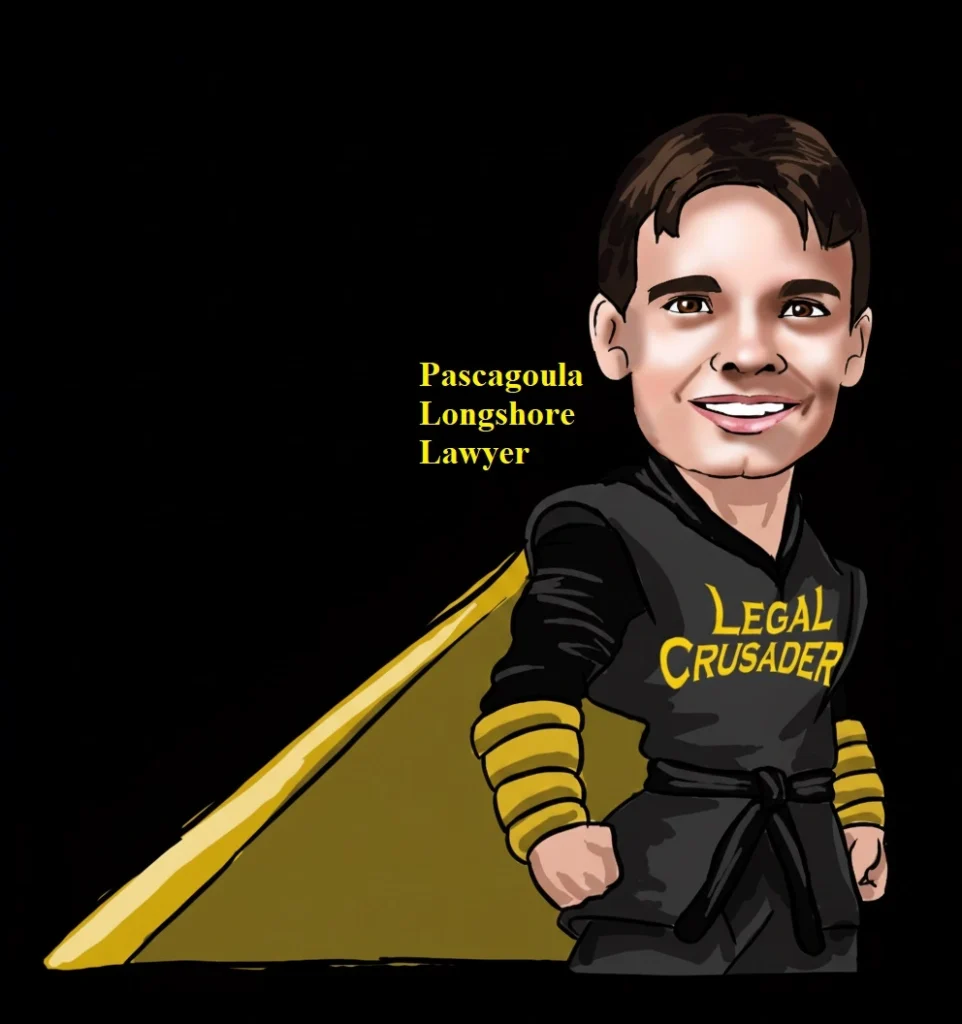
What A Pascagoula Longshore Lawyer Sees The Moment You Call, That The TV Lawyer Never Does
Here is what actually happens when you call that 1-800 number on the billboard.
Someone answers. It is not the lawyer whose face is on the sign. It is a person whose job is to sign you up. They ask a few questions, tell you that you have a great case, and put your information into their system. Then they assign your file to a case manager.
The case manager is a secretary with a different title. She handles dozens of files at once. No law license hangs on her wall. Legal advice is off the table when she is the one on the phone. Strategy calls on your Pascagoula longshore file are not hers to make. She cannot walk into a federal hearing room and fight for you. Her job is to manage the paperwork and keep you from calling too often. What she definitely isn’t is this: she isn’t a Pascagoula longshore lawyer.
Months go by. You call. You get the case manager. She tells you they are working on it. Meanwhile, the insurance carrier handling your claim has a dedicated longshore adjuster who does this every single day. That adjuster knows the federal system better than your TV lawyer does, because your TV lawyer has never been in the federal system.
Out comes a lowball number from the insurance company. Then your TV lawyer, a man with no trial behind him in this federal system and no plan to start one now, looks at the Pascagoula insurance company’s number and calls it fair. You take it. You leave money on the table. You find out years later what your case was actually worth. By then it is too late.
That is not a hypothetical. That is a pattern that plays out on this coast every year with longshore workers who deserved better.
Why A Pascagoula Longshore Lawyer Has To Know The Federal System Cold
Congress wrote the Longshore and Harbor Workers’ Compensation Act, so it is federal law and not a state statute. It has nothing to do with Mississippi state workers’ compensation. Oversight of the Act sits with the U.S. Department of Labor’s Longshore arm, known as the Office of Workers’ Compensation Programs, far from any Jackson County courtroom. Mississippi longshore claims are handled through the New Orleans District Office and the cases are tried in front of Judges in the Covington, Louisiana Offices, and cases that go to formal hearing are decided by Administrative Law Judges.
Think of a second legal world. It has forms of its own, procedures of its own, deadlines, standards and judges of its own, and none of it lines up with what a Pascagoula state comp lawyer deals with. Knowing Mississippi personal injury law does not prepare you for this system. Knowing Mississippi workers’ compensation law does not prepare you for this system. The only thing that prepares you for this system is actually practicing in it.
I have practiced in it. The TV lawyer advertising on your television set has not so he’s pretending to be a Pascagoula longshore lawyer and the truth is he isn’t.
When your case goes to hearing before an Administrative Law Judge, the judge has seen lawyers walk through that room hundreds of times. He knows which lawyers know what they are doing and which ones are faking it. He knows which lawyers have prepared their clients properly and which ones showed up hoping for the best. He knows which lawyers understand the LHWCA and which ones looked it up the night before.
I know those judges. Longshore hearings are where I live, and I swing hard in every one. The TV lawyer has never met them and has nothing to offer you when the hearing date arrives so why would you hire him as your Pascagoula longshore lawyer?
What The LHWCA Actually Does And Does Not Do For You
Thanks to the Longshore and Harbor Workers’ Compensation Act, covered Pascagoula dockside and shipyard workers have the employer’s insurance carrier owing three things. Medical bills get paid with no deductible, two-thirds of your average weekly wage replaces your paycheck while you cannot work, and permanent disability pay follows if the injury leaves you with lasting impairment.
Two-thirds of your wage sounds like something. It is not enough. If you are the primary earner in your household, two-thirds of your wages while the mortgage, the car payment, the groceries, and the medical bills keep coming in is a financial crisis playing out in slow motion. The insurance carrier knows this. They count on it. The pressure is designed to make you accept whatever they offer before you understand what you are entitled to.
The Act also provides a schedule of compensation for permanent partial disability. Lose the use of a hand. Lose the use of an arm. Suffer permanent hearing loss from years of working in the noise of a shipyard. Lose vision from a workplace incident. Each of those injuries is assigned a specific number of weeks of compensation under the schedule. The insurance carrier’s entire strategy is to fight the extent of your disability and minimize the number of weeks they have to pay. Your lawyer’s entire job is to document your disability fully and fight for the maximum the law allows.
That fight requires knowing the system cold. It requires knowing which medical evidence matters and how to present it in a federal hearing. It requires knowing how to cross-examine the carrier’s medical expert when he minimizes your injury on the stand. It requires knowing the judges and knowing how they think about these cases.
The TV lawyer cannot do any of that. He has never done it. And he is not going to figure it out on your case.
Ingalls, Bollinger, And The Employers Who Have Been Fighting Longshore Claims For Decades
Huntington Ingalls Industries operates Ingalls Shipbuilding in Pascagoula. It is one of the largest military shipbuilders in the United States and one of the largest private employers in Mississippi. Bollinger Shipyards operates multiple Gulf Coast facilities. The port and waterfront operations along the Pascagoula River corridor have been generating longshore claims for generations.
For decades, those same employers and the insurance companies behind them have worked LHWCA claims, and they do it well. Whoever is assigned to your claim at the insurance company has been through hundreds of injured worker files already. He knows every tactic. He knows how to conduct a recorded statement that sounds routine and produces answers that will hurt you at hearing. He knows which forms to send you that, if you sign them without reading them carefully, give away rights you did not know you had. He knows which doctors will minimize your injury and how to funnel you toward them.
That is who you are up against from the moment you report your injury. The carrier starts building its defense before you have even thought about calling a lawyer. Each day you go without a seasoned lawyer, the insurance company on your Pascagoula claim gains ground and you lose it.
That billboard face, the TV lawyer, has never faced an Ingalls longshore adjuster across a federal hearing room, not even once in all his years of advertising. I have. That is not a small distinction.
The Three Things The Insurance Carrier Does In Every Single Longshore Case
First, they attack the claim’s legitimacy. No matter how clear the facts are, the carrier will find something to dispute. A prior medical record. A statement you made without thinking about how it would read later. Something in your personnel history. They will build an argument that your injury was pre-existing, that you exaggerated it, or that it was not caused by your work. The adjuster running this has done it so many times he does it without thinking. That is not a threat. It is a description of what is already happening on your file.
Second, they control your medical care. The LHWCA gives the employer the right to direct your initial treatment. The doctor they send you to is not there to get you fully healed. He is there to produce records that serve the carrier’s position and clear you for return to duty as quickly as possible. You are entitled to your own physician. Using that right at the proper moment, and choosing a doctor whose chart notes will still stand up when a federal judge reads them, is a strategic decision, and its consequences follow your longshore claim from the first visit to the final ruling.
Third, they offer you money before you know what your case is worth. The timing is deliberate. They watch the financial pressure build and they put a number in front of you when you are most vulnerable. They pick that figure by asking what is the least they can pay without a fight, and what your Pascagoula injury is really worth under the Act never enters the math. Years later, the ones who signed on that dotted line are still counting what it cost them. The ones who get proper representation before accepting anything find out what the case was actually worth first.
Three Mistakes That Will Wreck Your Longshore Case Before It Even Starts
Mistake number one is agreeing to a recorded statement with the insurance adjuster before a lawyer has weighed in on your longshore claim. You are not required to give one. The adjuster will frame it as routine, as something that speeds up your claim, as just getting the facts down. As you hear that framing, understand that every word in it is designed to lower your guard. The statement is a tool. Its whole purpose is to collect your words now so they can be read back to you at a hearing. Every question the adjuster asks is crafted to produce an answer that helps the carrier, not you. Wait until you have sat down with a lawyer who has personally stood inside a federal longshore hearing room, and only then say a word.
The second mistake is signing carrier forms without reading them. Some of those forms are broad medical releases that hand the carrier the keys to your entire medical history. They will review every record going back years looking for the pre-existing condition argument. Some forms waive rights you did not know existed. Once you decide you matter, nothing gets your signature until a lawyer who works longshore cases has gone over every page of it first.
The third mistake is waiting too long to act. Your clock under the LHWCA is two years. It starts on the injury date, or on the day you learned, or should reasonably have learned, that your injury came from your work. Two years sounds like a long time. It disappears fast. Witnesses leave the facility or forget the details. Surveillance footage from the day of the accident gets overwritten. Medical records become difficult to obtain. And every day you wait is another day the carrier’s defense gets stronger while yours stands completely still.
The Pascagoula Shipyard Community That Has Built This Country’s Navy And Deserves More Than A Settlement Mill
The workers at Ingalls Shipbuilding have built destroyers, amphibious assault ships, Littoral Combat Ships, and some of the most technically complex naval vessels afloat anywhere in the world. The people working along the Pascagoula waterfront do work that requires years of training, carries serious physical risk every single day, and keeps this country’s naval capability operational.
When one of those workers gets hurt, they deserve a lawyer who takes their claim as seriously as they took their work. Not a lawyer whose face is on a billboard and whose name the case manager will mention to them three months after they signed the contract. A lawyer who picks up the phone, knows your name, knows your file, knows the system your case lives in, and is prepared to walk into that federal hearing room in New Orleans and fight.
My office is in Ocean Springs. That is twelve miles from the Ingalls main gate. I am not calling you from a tower in Jackson or a New Orleans satellite office staffed by people who have never been to Pascagoula. I am here. I know this community. I know what is at stake for the families in Moss Point, Gautier, Hurley, and Escatawpa who depend on those shipyard wages.
I have been practicing law for decades. I have tried these cases. I know the judges who decide them. The TV lawyer on the billboard cannot say any of that, and if you ask him directly, he will not be able to prove otherwise.
The Foster Fair Fee Guarantee
I am the only lawyer on the Gulf Coast who puts this in writing and means it: you will put more money in your pocket than I put in mine on your case. Every case. No exceptions. That is the Foster Fair Fee Guarantee, and it goes in your contract on the day you hire me.
The TV settlement mill will not make that promise. Their operation depends on volume. When you run dozens of cases at once through a system of case managers, the fee is the priority and your individual recovery is what it is. That is not a character attack on anyone. It is the math of how that business model works.
I take a limited number of cases. I work every one myself. When I am willing to guarantee in writing that you come out ahead of me financially, that tells you something different about how I operate than what the billboard lawyer is offering.
One Gulf Coast TV lawyer was so threatened by injured Pascagoula shipyard workers seeing this guarantee that he weaponized the Bar complaint process to try to get it taken down. The Bar reviewed it and threw the complaint out. When a competitor uses a regulator as a marketing weapon to suppress a written promise that benefits consumers, he is not raising a legitimate ethics concern. He is telling you exactly what he is afraid of. An injured worker who knows the right comparison question is the worst thing that can happen to a settlement mill, and that complaint is what the worry looks like in writing.
Before you make any decision, get my free longshore book. Inside you will find the moves the insurance company is making on your claim this week, plus the errors that do permanent damage before a lawyer ever gets a call from you. Fill out the form below and I will send it immediately.
▼ Get Your FREE Book Right Now ▼
Fill Out The Form Below And I Will Send It Immediately
The Pascagoula Longshore $5,000 Double Dare No TV Lawyer Has Ever Collected
I will pay you $2,500.00 cash if the TV lawyer whose face is on the billboard personally handles your Pascagoula longshore case from the first call to the final check. Every phone call. Every hearing appearance. Every filing. Personally. Here is the second half, another $2,500.00 from me the day that same TV lawyer personally stands up for your Pascagoula case before a federal Administrative Law Judge, the kind who hears New Orleans district cases for the U.S. Department of Labor.
That challenge has sat out there for years. Not a single worker has claimed that money. And it will stay that way, since that appearance never takes place. Whoever sits on the insurance side of an Ingalls or Bollinger longshore file knows that too. That is exactly why they lowball every case signed by a TV settlement mill.
Questions You Should Be Asking Before You Hire Anyone
Should I Hire A TV Lawyer Who Has Never Tried A Longshore Case?
No. And here is why that answer is exactly that simple. A longshore case that goes to hearing is tried in front of a federal Administrative Law Judge under federal law and federal procedure. The lawyer who has never done this does not know the judges, does not know the evidentiary standards, does not know how to present medical evidence in this specific federal system, and does not know the arguments that work and the ones that get you nowhere. He is learning on your case. Your injury, your wages, your family’s financial future becomes his classroom. You deserve someone who has already been through that classroom and knows how to win.
Should I Hire A TV Lawyer Who Has Never Even Met The Judge That Will Decide My Longshore Case?
Think about what that actually means in practice. Full benefits or a sliver of them. Medical care that keeps coming or medical care that gets cut off. A family that receives what it needs or a family that receives whatever the insurance company chose to offer. One Administrative Law Judge settles all of that for your Pascagoula claim, and that judge has never laid eyes on your lawyer. Your lawyer does not know how that judge thinks about medical evidence. Does not know what that judge has ruled on similar disputed injuries in prior cases. Does not know what that judge expects in terms of preparation and how evidence is organized and presented. Your lawyer is walking into that federal hearing room blind. You are not just at a disadvantage. You started behind and you stayed there.
What Is The Covington District Office And Why Has No TV Lawyer Ever Been There?
The Covington, Louisiana offices of the U.S. Department of Labor are where the Administrative Law Judges who hear Mississippi longshore cases work. No TV lawyer has ever been there for a hearing because TV lawyers do not try these cases. What do they do instead? They take whatever the insurance company puts on the table, since nobody at that desk can scare an adjuster with a formal hearing. When a case goes to hearing, it also goes to the Benefits Review Board on appeal and potentially to the Fifth Circuit. Every stage of that process requires a lawyer who knows the federal system. The carrier’s team knows it. Your lawyer needs to know it too.
Am I Covered Under The LHWCA Or Mississippi Workers’ Compensation?
As you think through that question, understand that the answer is not obvious and it is not the same for every worker at the same facility. Workers doing maritime employment on navigable waters or in the adjacent loading, unloading, and shipbuilding areas generally fall under the LHWCA. Workers at the same employer doing administrative or land-based support work may fall under Mississippi state workers’ compensation instead. The difference in available benefits can be significant. Getting the coverage question wrong at the start of your case, or trusting it to a lawyer who does not know the difference, is the kind of mistake that cannot always be fixed once it is made.
The Adjuster Wants A Recorded Statement. What Do I Do?
You decline. No rule makes you hand the insurance company a recorded statement, and a Pascagoula longshore worker can simply say no. The adjuster will tell you it is just standard procedure, that it helps document the facts, that it is in your interest to cooperate. None of that is true. Nothing about that recording helps you, because every answer on it is saved for the hearing, where the other side uses it to knock down your claim. The adjuster is trained to ask questions that sound routine and produce answers that hurt your claim. The right answer is: I need to speak with my lawyer before I give any statement.
How Long Do I Have To File A Pascagoula Longshore Claim?
Two years from the date of injury or the date you knew or reasonably should have known your injury was related to your work under 33 U.S.C. Section 913. Hearing loss and respiratory disease build up quietly over years of exposure at Ingalls or Bollinger, so the filing clock starts when you realized, or ought to have realized, that your job was the cause. Evidence disappears. Witnesses move. Medical records become difficult to obtain. Every day you wait is a day the carrier is ahead of you.
What Is The Foster Fair Fee Guarantee And How Is It Different From What The TV Lawyer Offers?
The Foster Fair Fee Guarantee is a written commitment in your contract that you will put more money in your pocket than I put in mine. Not a promise at the initial meeting that evaporates when the case gets complicated. A written guarantee in the contract you sign on day one. The TV lawyer’s contract does the opposite. His fee structure is engineered so that on most cases his cut comes out larger than yours after expenses, costs, and the referral fee he is collecting that you were never told about. No TV settlement mill anywhere will put a fee fairness guarantee in writing because the math of their operation does not allow it.
P.S. Across the table, the adjuster on your Ingalls or Bollinger claim has handled hundreds of longshore files inside this federal system. Count the longshore hearings the TV lawyer you are considering has worked, and you get zero. That is not an even fight. The free book on this page tells you exactly what questions to ask before you decide who fights it for you.
P.P.S. The Foster Fair Fee Guarantee is in your contract in writing on day one. You put more money in your pocket than I do. Every case. No exceptions. No TV settlement mill on this coast will promise you that because they cannot afford to keep it.
▼ Get Your FREE Book Right Now ▼
Fill Out The Form Below And I Will Send It Immediately
Related Pages
- Pascagoula Legal Services
- Pascagoula Car Wreck Lawyer
- Mississippi Longshore Lawyer
- Ocean Springs Longshore Lawyer
- Mississippi Work Injury Lawyer
- Pascagoula Workers Compensation Lawyer
Specific Pascagoula Longshore Resources
- Ingalls Workers Compensation vs Longshore Claim
- Pascagoula Dock Worker Injury Lawyer
- Pascagoula Dockworker Injury Attorney
- Choose Your Own Doctor Under the Longshore Act Mississippi
- Pascagoula Shipyard Crane and Forklift Accident Lawyer
- Ingalls Repetitive Injury Longshore Claim
- Pascagoula Longshore Permanent Disability Schedule
- Pascagoula Longshore Recorded Statement Warning
- Pascagoula Longshore Claim Deadline
- Ingalls Hearing Loss Longshore Claim
- Ingalls Welding Fumes Longshore Claim
- Port of Pascagoula Injury Lawyer
- Pascagoula Maritime Injury Lawyer
- Pascagoula Longshore Lump Sum Settlement
- Pascagoula Longshore IME Lawyer
- Ingalls Asbestos Exposure Longshore Claim
- Pascagoula Longshore Claim Denied
- Pascagoula Longshore Maximum Medical Improvement
- Pascagoula Longshore Average Weekly Wage
- Ingalls Pipefitter Injury Longshore Claim
- Ingalls Crane Operator Longshore Claim
- Pascagoula Barge Injury Lawyer
- Pascagoula Jones Act Lawyer
- Bollinger Shipyards Longshore Claim